

Posted by Lee Alderman on 8th Jan 2026
Physical Security Gaps Small Businesses Cannot Afford to Ignore
I've watched too many small businesses lose thousands of dollars because they treated physical security as an afterthought.
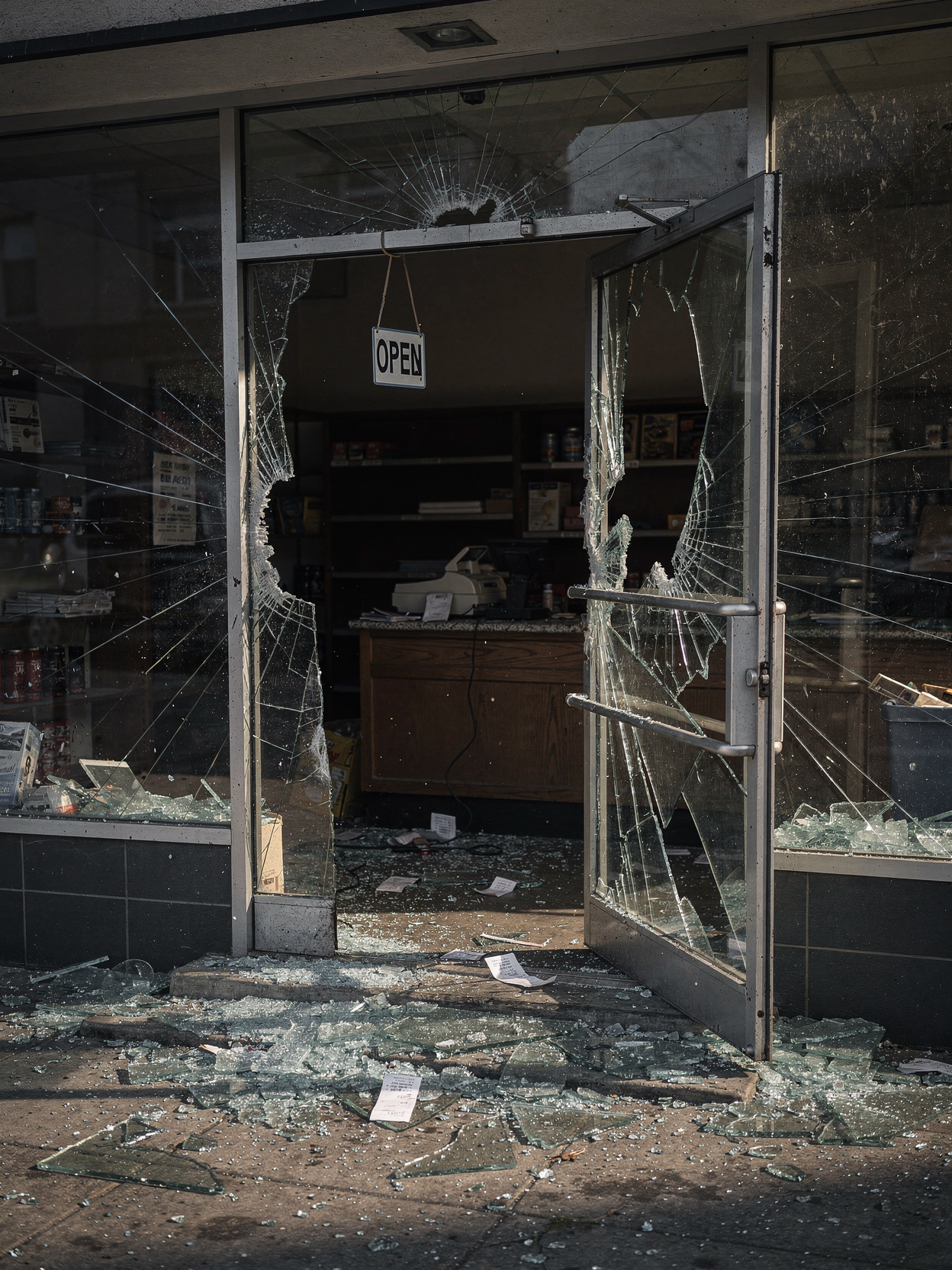
The average small business break-in costs between $8,000 and $25,000 when you factor in downtime, cleanup, stolen inventory, insurance deductibles, and premium increases. That's not counting the 3-4 hours minimum you're closed while dealing with the aftermath.
Here's what I see repeatedly: business owners invest in cybersecurity while leaving their physical premises vulnerable to a screwdriver and two minutes of effort.
This guide outlines the exact vulnerabilities I've identified across hundreds of small businesses and the specific fixes that deliver measurable protection.
The Key Control Crisis Nobody Talks About
Most small businesses have zero idea who can access their building.
I'm not exaggerating. Business owners start with keys handed over by property managers—keys that previous tenants might have copied. Even businesses that rekey on day one continue using those same keys three years later, through dozens of employee turnovers.
Nobody tracks who made copies. Nobody knows which former employees still have access. Nobody implements any systematic key control.
The fix costs less than most businesses spend on coffee in a month: restricted security keys.
Use restricted security keys, never standard keys that any hardware store will duplicate.
Restricted keys require owner authorization and ID verification for duplication. This single change eliminates unauthorized access from former employees, contractors, and anyone who "borrowed" a key and made a copy.
The Hardware Problem Costing You Revenue
Walk through any commercial district and you'll find small businesses protected by residential-grade locks.
Grade 3 locks—the kind you'd use on your home—appear on commercial entry points. These locks meet minimum residential standards. They fail under commercial use.
Grade 1 commercial locks withstand 400,000 cycles and 250 pounds of force. They're built for heavy daily use and forced entry attempts.
The difference matters when someone shows up with a pry bar.
According to FBI data, approximately 33% of commercial break-ins succeed because of inadequate door security. Thieves carry large screwdrivers or pry bars. Without proper jamb protection, they bypass residential-grade locks in minutes.
What Proper Door Security Looks Like
Install these three components on every entry point:
- Grade 1 commercial deadbolts rated for high-security applications
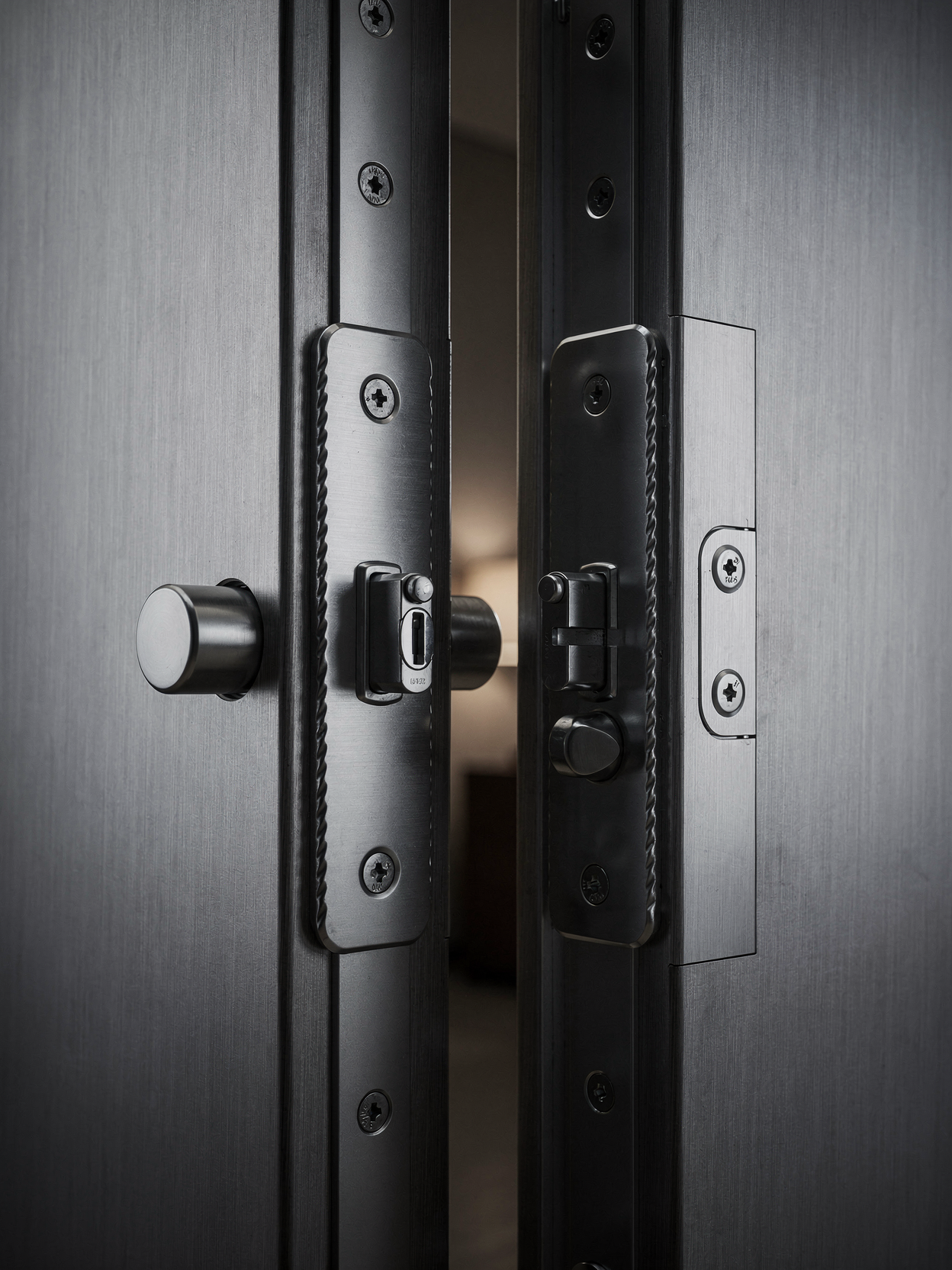
- Jamb protection that prevents pry bar attacks on the door frame
- Full-length interlocking astragals on double doors that protect from top to bottom
Full-length interlocking astragals have become standard in my security assessments. They protect the entire door frame, making pry attempts virtually impossible. The visual deterrent alone stops most attempts—thieves see the reinforcement and move to easier targets.
Audit Your Current State in 30 Minutes
You need to know what you're working with before you can fix anything.
Schedule a physical security walk-through. Inspect every entry point. Check these specific items:
- Do all doors latch properly and lock securely?
- Are any locks loose or showing wear?
- Do exterior lights function after business hours?
- Can you identify the grade of each lock installed?
- Do you have jamb protection on commercial entry doors?
- Can you list everyone who has keys to your facility?
That last question usually reveals the problem. Most business owners can't answer it.
? Pro tip: Test your exterior lighting by leaving after dark once per quarter. Lights that fail only show their problems when you're not there to see them.
Prioritize Fixes by ROI
Limited budget? Start with entry points.
Your front and back doors represent the highest-probability breach points. Secure these first:
Phase 1: Entry Point Hardening (Week 1-2)
- Upgrade to Grade 1 commercial locks
- Install jamb protection
- Implement restricted key systems
- Add full-length astragals to double doors
Phase 2: Perimeter Protection (Week 3-4)
- Install motion-activated lighting
- Add surveillance cameras at entry points
- Secure secondary access points (windows, loading docks)
Phase 3: Integrated Systems (Month 2-3)
- Implement access control systems
- Integrate cameras with mobile notifications
- Set up monitoring protocols
This staged approach lets you strengthen security incrementally while spreading costs across quarters.
Low-Cost Measures That Deliver Measurable Protection
You don't need enterprise budgets to implement effective security.
Restricted security key systems cost $5-20 per key plus $100-300 for initial setup. This prevents unauthorized duplication and gives you complete Key Control.
Commercial-grade deadbolts range from $150-400 per door including installation. The upgrade from residential to Grade 1 commercial hardware typically pays for itself after preventing a single break-in attempt.
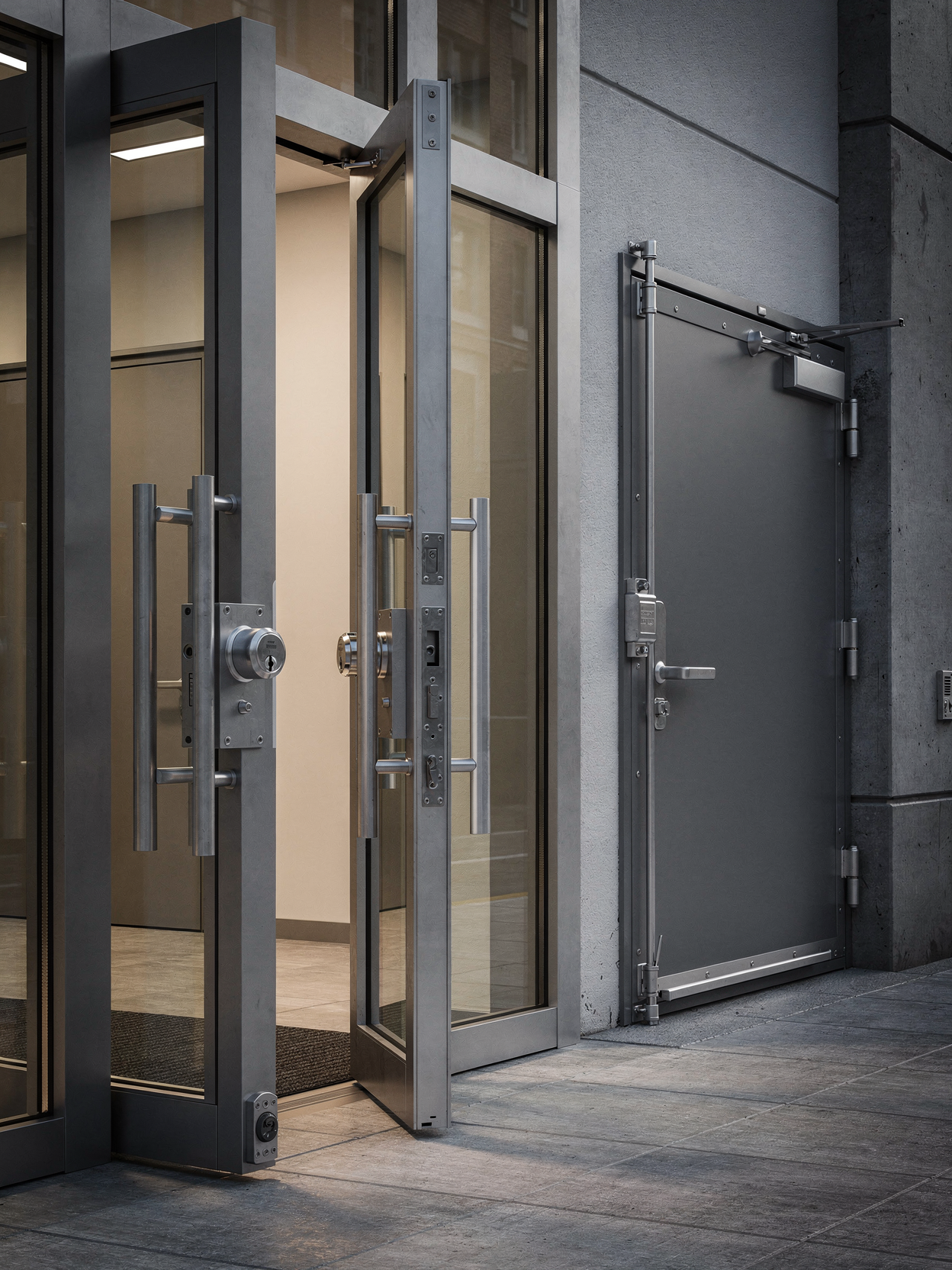
Jamb protection kits cost $50-150 per door and install in under an hour. They stop pry bar attacks that would otherwise succeed in minutes.
Motion-activated lighting runs $30-100 per fixture. Proper illumination eliminates dark corners where thieves work unobserved.
Basic access control systems for small businesses start at $1,000-3,000 for installation, with key fobs costing $5-20 each. You gain individual access tracking and can revoke access instantly when employees leave.
Build SOPs for Access and Monitoring
Hardware alone doesn't create security. You need operational discipline.
Document these procedures and train all managers:
Key Management Protocol
- Maintain a log of every key issued, including date and recipient
- Collect keys immediately upon employee departure
- Never issue keys marked "Do Not Duplicate"—use restricted keys instead
- Rekey annually or after any suspicious activity
Daily Security Checklist
- Verify all doors lock properly before leaving
- Test exterior lighting weekly
- Review camera footage for any anomalies
- Report malfunctioning hardware immediately
Incident Response Plan
Keep these numbers accessible to all managers, not just owners:
- Local police non-emergency line
- Insurance company claims contact
- Trusted locksmith for emergency service
⚠️ Warning: Managers who panic during break-ins often Google "emergency locksmith" and call the first result. Many of these are scammers who overcharge and provide inadequate security. Designate a trusted professional before you need one.

Integrate Physical and Digital Security
Modern access control systems work alongside physical security measures.
You can install full-length interlocking astragals on doors with electronic access control. The systems complement each other—physical barriers prevent forced entry while electronic systems track who enters and when.
Key card or fob systems provide individual access tracking. You see exactly who entered your facility and at what time. When employees leave, you revoke their access instantly without rekeying.
Surveillance cameras with motion detection send mobile notifications when someone enters restricted areas. You know about potential problems in real-time, not when you arrive the next morning.
This integration creates layered defense. If one system fails or is bypassed, others remain active.
Measure and Iterate Quarterly
Track these metrics to evaluate security effectiveness:
- Incidents per quarter: Break-ins, attempted break-ins, and suspicious activity
- Response time: How quickly you address security alerts
- Hardware failures: Malfunctioning locks, lights, or cameras
- Access violations: Unauthorized entry attempts logged by electronic systems
Review these numbers quarterly. Look for patterns. A spike in attempted break-ins might indicate you need stronger deterrents. Frequent hardware failures suggest you need better maintenance protocols.
Treat security like any other operational KPI. Measure it, track it, and improve it systematically.

When Incidents Occur Despite Prevention
No security system prevents 100% of attempts.
When a breach happens, follow this sequence:
Immediate Actions (First 30 Minutes)
- Call police and file a report
- Document everything before cleanup—take photos and videos
- Contact your insurance company to report the incident
- Call your designated locksmith to assess entry method
Same-Day Response
- Repair or replace compromised entry points
- Once the breach point is secured, review all other entry points with comparable layouts or hardware for the same vulnerability. They may come back the next day.
- Review surveillance footage to understand the method
- Notify all staff about the incident and any procedure changes
Week-One Follow-Up
- Complete insurance claims process
- Conduct full security audit of all entry points
- Implement additional measures based on breach analysis
- Update emergency response procedures based on lessons learned
The locksmith who responds should identify exactly how thieves gained entry and recommend specific upgrades to prevent repeat attempts using the same method.
The 90-Day Security Improvement Plan
You want to strengthen your physical security posture quickly.
Here's my recommendation: Work with a qualified security professional.
Most business owners don't know the difference between Grade 1 and Grade 3 locks. They can't identify vulnerable jambs or assess whether their current hardware meets commercial standards.
A security professional evaluates your specific situation and recommends solutions that fit your budget. You don't need to implement everything at once. Break it into stages:
Stage 1: Assessment and Critical Fixes
- Professional security audit
- Upgrade entry point hardware
- Implement restricted key system
Stage 2: Perimeter Strengthening
- Install proper lighting
- Add surveillance at key points
- Secure secondary access points
Stage 3: Integration and Monitoring
- Set up access control systems
- Integrate monitoring with mobile alerts
- Train staff on new procedures
- Document all protocols
This approach delivers immediate improvement while building toward comprehensive protection.

What This Means for Your Business
Physical security directly impacts your bottom line.
A single break-in costs $8,000-25,000 in direct expenses. Add the opportunity cost of 3-4 hours of downtime, and you're looking at significant revenue loss.
Insurance deductibles typically run $1,000-5,000. Your premiums increase after claims. These costs compound over years.
Compare that to the investment in proper security: $2,000-5,000 for comprehensive entry point hardening, $1,000-3,000 for basic access control, and $500-1,500 for proper lighting and surveillance.
The math is clear. Prevention costs less than recovery.
More importantly, proper security lets you focus on running your business instead of worrying about what might happen when you're not there.
Start with key control and entry point hardware. These two changes eliminate the majority of successful break-in attempts. Add layers from there based on your specific risk profile and budget.
Your physical security deserves the same systematic approach you apply to other business systems. Audit the current state, prioritize improvements by ROI, implement in stages, and measure results quarterly.
The businesses that fail are the ones that wait until after a break-in to take security seriously.
Concerned about hidden security gaps in your business?
Book a professional physical security assessment with 310 Lock and identify vulnerabilities before they turn into costly incidents.