

Posted by Lee Alderman on 20th Feb 2026
Physical Security Checklist for Calgary Small Businesses
In 2024, most businesses in Calgary were small businesses. Most operate with tight margins, limited staff, and no dedicated security team.
And thieves know it.
Physical security isn't about compliance checklists or insurance requirements. It's a measurable business system that protects your assets, reduces loss, and keeps your team safe.
This checklist walks you through the Blueprint → Build → Run approach to physical security. Audit what you have, install what's missing, and maintain it with clear protocols.
Audit Your Current Security Stack
Start with a simple scoring system. Rate each category from 0 to 10.
Entry points: Are your doors commercial-grade? Do they close properly in snow and wind? Can someone pry them open with a crowbar?
Locks and keys: Do you use high-security keyways that can't be duplicated at hardware stores? Do you conduct key audits when employees leave?
Surveillance: Do your cameras record continuously and cover all entry points? Do they alert you before someone reaches the building?
Access control: Can you track who enters your facility and when? Do you have logs showing after-hours access?
Emergency protocols: Do you have documented procedures for break-ins, fires, and medical emergencies? Have your staff signed off on them?
Bring in a security professional for this audit. Locksmiths and security experts see break-ins daily. They know how thieves gain access and can identify vulnerabilities you'll miss—like door frame gaps that create easy pry points.
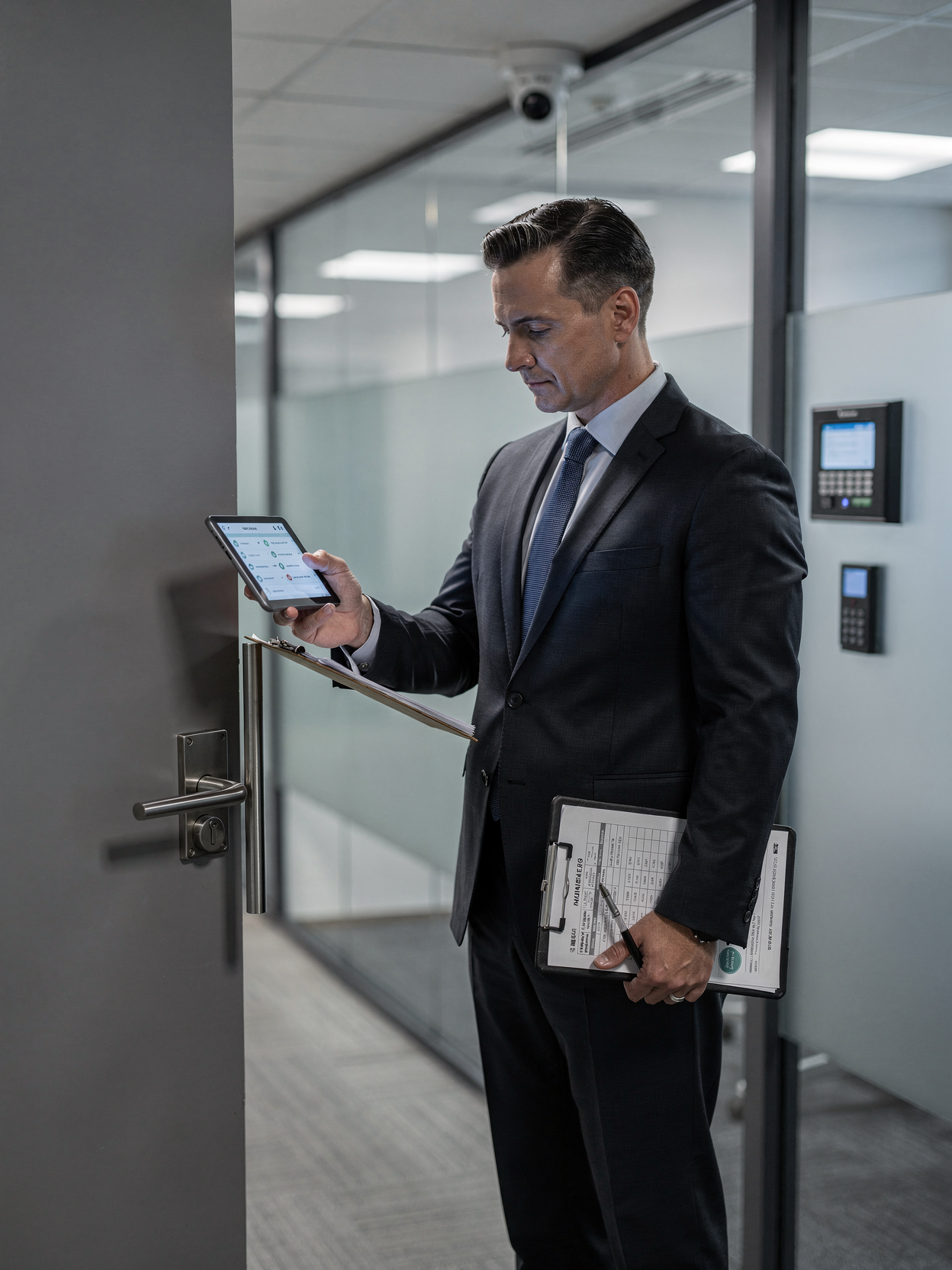
Secure Entry Points First
Calgary's climate creates specific vulnerabilities. Snow adds weight to doors. Wind gusts push them open. Your door closers need enough power to handle both.
Use commercial-grade locks, never residential-grade. Residential locks bypass easily. Commercial locks resist picking and forced entry.
Install latch protectors and astragals on door frames. These prevent pry bar attacks—and attacks are escalating. Thieves now carry large crowbars instead of screwdrivers. They're bolder and more destructive than before.
Protect the entire height of your door frame, not just the latch area.
Key control matters more than most owners realize.
Use high-security keyways like Mul-T-Lock. Employees can't duplicate these keys at hardware stores. When you collect a key from a departing employee, you know it's the only copy.
Conduct key audits semi-annually or at least annually. Track who has keys, what areas they access, and when keys were issued. Update your audit log every time someone joins or leaves your team.
Install AI-Powered Surveillance Systems
Decorative cameras don't stop theft. Proactive systems do.
The AI video surveillance market reached $6.51 billion in 2024 and will hit $28.76 billion by 2030. This isn't future tech—it's current best practice.
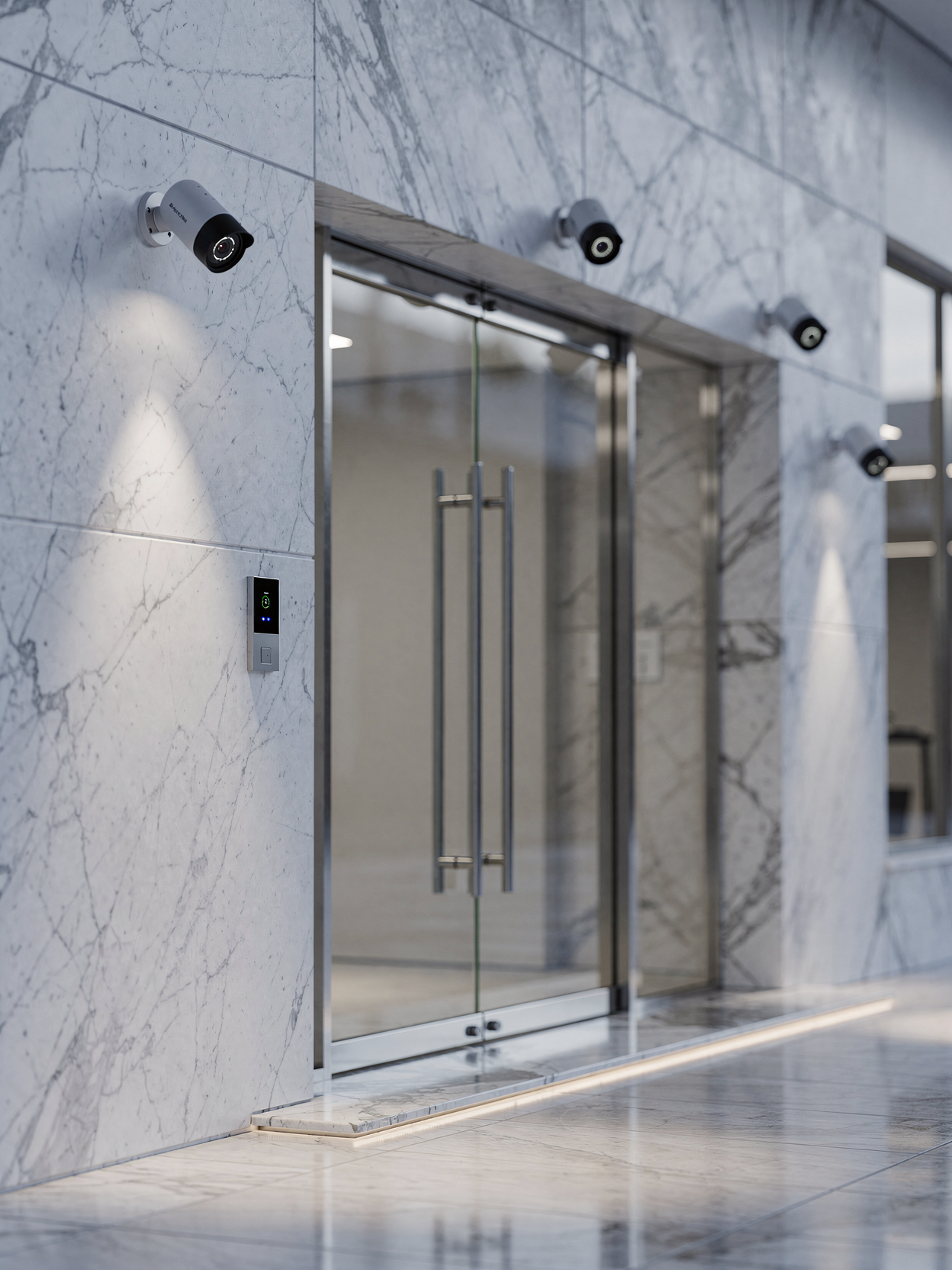
AI-powered cameras detect people and vehicles before they reach your building. You get alerts when someone enters your backyard or loiters near entry points. You can respond before a break-in occurs. A great camera that we have used quite frequently for customers is the Alarm.com ADC-VC729P 4MP Outdoor Ethernet Camera Floodlight, DC/POE++ Powered.
The above camera includes two-way communication. You can tell an intruder to leave the property or that police are being called—all from your smartphone, anywhere in the world.
Place cameras at every entry point. Front door, back door, side access points. Identify blind spots where someone could approach unseen.
Make sure your cameras integrate with your incident log or CRM. You need records that tie security events to timestamps, response actions, and outcomes. This documentation speeds up investigations and insurance claims.
Implement Access Control That Tracks Entry
Cloud-based access control systems cost less than you think. Key fobs run inexpensive. Licensing fees are one-time charges, not recurring subscriptions.
Cloud-based access control systems are often more affordable than many organizations expect. Credential options such as mobile credentials are cost-effective, and in many deployments licensing is structured as a one-time fee rather than an ongoing subscription, helping keep long-term operating costs predictable.
With professionally designed access control systems in Calgary you can manage access from your phone. Add new employees, revoke access for departing staff, and check entry logs—all remotely.
You can manage access from your phone. Add new employees, revoke access for departing staff, and check entry logs—all remotely.
Access logs reduce insider risk. You know who entered which areas and when. If inventory goes missing or equipment gets damaged, your logs narrow down the investigation window.
Many insurance companies offer discounts of five to 20 percent when you install integrated alarm systems with security cameras. Your access control system demonstrates risk mitigation to underwriters.
Document Emergency Protocols
Create a safety book or company policy manual. Include all emergency contact numbers, notification chains, and response procedures.
Require staff to sign off on these protocols. This creates awareness and accountability. Everyone knows what to do when an alarm triggers or an incident occurs.
Your safety book should include:
- Alarm monitoring station contact information
- Fire monitoring station numbers
- List of key personnel to notify during emergencies
- Step-by-step response procedures for break-ins, fires, and medical situations
- Local police non-emergency and emergency numbers
- Building evacuation routes and assembly points
Keep copies on-site and in cloud storage. Your team needs quick access during high-stress situations.
Run quarterly drills. Measure response times. Identify gaps in your protocols and fix them before a real emergency tests your system.

Maintain Your Security System
Schedule semi-annual or annual maintenance checks. Test that alarm zones fire correctly. Verify your system logs properly. Confirm time settings are accurate. Check backup batteries.
Treat security maintenance like CRM hygiene, not a one-time project.
Update staff training when you modify protocols or install new equipment. Document changes in your safety manual. Keep signature logs current.
Review your security footage periodically. Spot patterns in after-hours activity. Identify vulnerabilities you missed during your initial audit.
Measure Security Outcomes
Track these metrics:
- After-hours access attempts: How many times did someone try your doors outside business hours?
- False alarm rate: Are your systems triggering unnecessarily? High false alarm rates waste response resources.
- Response time: How quickly do you or your team respond to security alerts?
- Insurance premium changes: Did your security improvements lower your rates?
- Inventory shrinkage: Has theft or loss decreased since installing your system?
Security professionals who see break-ins daily can help you prioritize improvements within your budget. Simple solutions often make your business difficult enough to bypass that thieves move to easier targets.
The cost of a break-in—lost inventory, property damage, business interruption, and employee stress—exceeds the investment in proper security systems.

Start With Professional Assessment
Your first step is bringing in an expert. Security professionals identify vulnerabilities based on daily experience with how thieves actually operate.
They'll spot door frame gaps, weak lock grades, camera blind spots, and key control issues you won't notice yourself.
Work within your budget. Even startups with limited capital can implement foundational security measures that deliver measurable protection.
Physical security isn't a compliance checkbox. It's a business system that protects your assets, reduces loss, and gives your team confidence.
Audit your current setup. Install what's missing. Maintain it with documented protocols.
Your security stack should scale as your business grows—just like your CRM, your sales playbooks, and your operational systems.
Not sure how your business scores on this checklist?
Book a professional security assessment with 310 Lock and identify vulnerabilities before they turn into costly incidents.