Posted by Lee Alderman on 9th Mar 2026
How Quality Hardware Extends Your Facility Door Lifespan
Your facility doors take a beating. Every swing, every slam, every weather pattern adds stress to components most people never think about until something breaks.
The problem isn't the doors themselves. It's the hardware holding them together.
When you install cheap hinges, low-grade locks, or basic door closers, you're setting up a cascade of failures that will cost you far more than the upfront savings. Over a door's 20-year service life, maintenance costs typically exceed the initial purchase price by a factor of 10.
The True Cost of Cheap Hardware
Most facility managers focus on the wrong number. They see a $200 lock versus a $50 lock and choose the cheaper option to stay within budget.
Here's what that decision actually costs you:
Replacement frequency doubles or triples. Commercial-grade hardware lasts 15-25 years with proper maintenance. Residential-grade components fail in 5-7 years, sometimes sooner in high-traffic areas.
Labor hours multiply. Every replacement means scheduling contractors, coordinating access, and dealing with downtime. Those service calls add up fast.
Security incidents increase. When locks malfunction or doors don't close properly, you're leaving access points vulnerable. Commercial door failures often happen due to poor maintenance or lack of routine inspection.
The math is clear. Invest in quality hardware upfront, or pay for it repeatedly over the door's lifetime.
Which Hardware Components Fail First
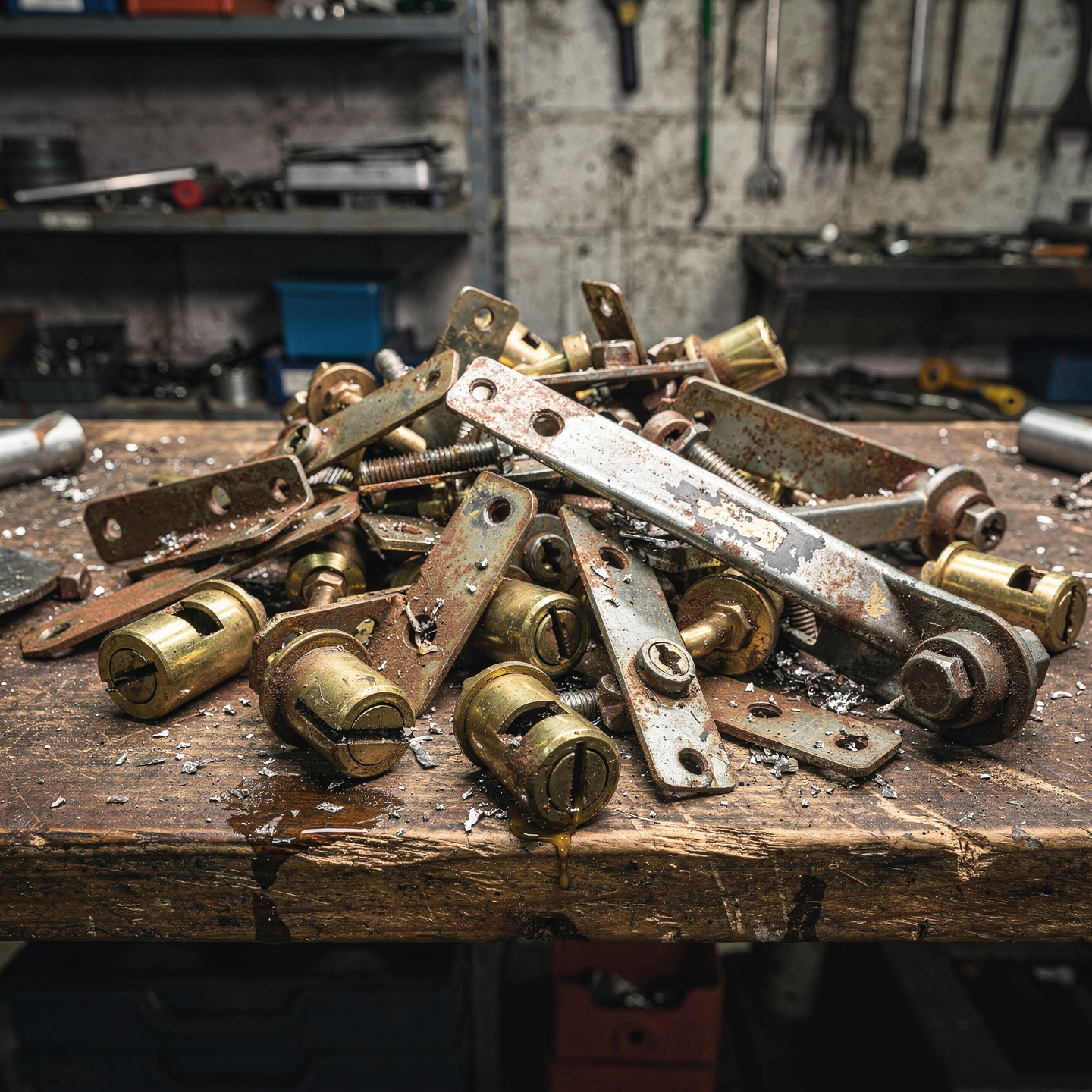
Not all hardware wears out at the same rate. Understanding the failure sequence helps you prioritize upgrades and catch problems early.
Door Closers
A failing door closer doesn't just inconvenience people. It damages everything downstream.
When closers lose hydraulic pressure or internal seals degrade, doors slam instead of closing smoothly. That impact stress transfers directly to hinges, frames, and strike plates. Over time, the frame loosens, screws strip out, and alignment shifts.
Quality commercial closers last 7-15 years depending on traffic volume. Cheap closers fail in 3-5 years, and their failure accelerates wear on every other component.
Hinges
Hinges are invisible until they fail. Then they become your most expensive problem.
When hinges wear out, doors sag. That sagging creates gaps at the top of the door frame and misalignment with the strike plate. Now your latch doesn't line up with the hole. The door scrapes the floor. The frame takes uneven stress.
This misalignment forces every other component to work under strain. Locks jam. Latches break. Weather seals fail. What started as a $40 hinge problem becomes a $2,000 door replacement.
Ball-bearing hinges last 15-25 years in commercial applications. Continuous hinges on high-traffic doors last even longer. Standard residential hinges fail in under 10 years when exposed to commercial use patterns.
Lock Sets
Lock failures show up in two ways: mechanical breakdown and weather exposure.
Mechanical failures happen when internal components wear out from repeated use. Weather exposure corrodes finishes, freezes mechanisms, and degrades seals. Both problems accelerate when you start with low-grade hardware.
Commercial lock sets designed for your specific traffic volume and security requirements last 10-20 years. Mismatched hardware fails faster and creates security vulnerabilities.
Semi-Annual Inspection Checklist
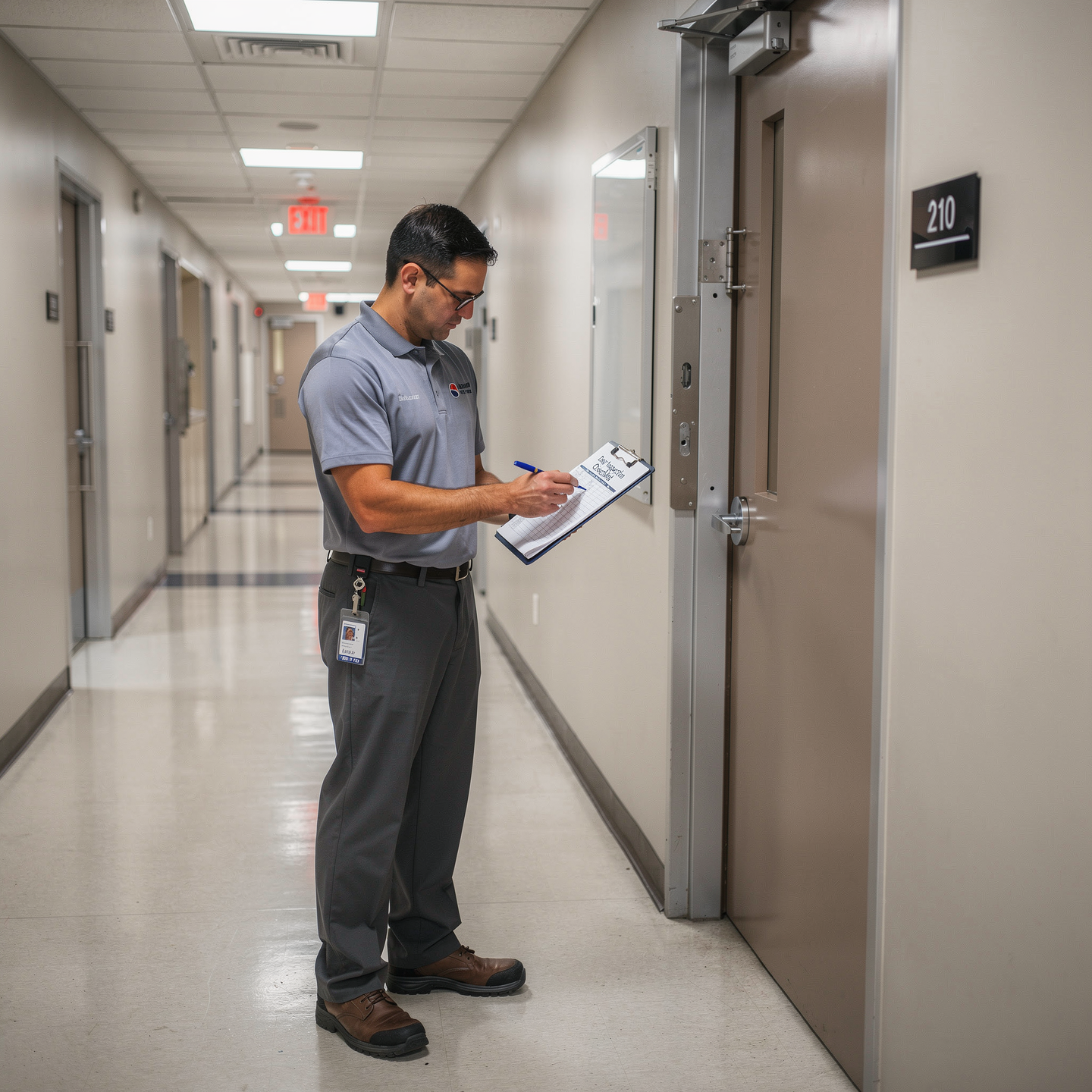
You can't fix what you don't inspect. A structured inspection schedule catches small problems before they cascade into major failures.
Run these checks every six months:
Visual alignment: Look for gaps at the top of the door frame. Uneven gaps signal hinge wear or frame movement.
Latch function: Does the door latch completely without forcing it? If you need to lift, push, or slam the door to engage the latch, your hinges or strike plate need attention.
Door closure: Watch the door close from fully open. It should close smoothly and latch on its own. If it stops short, swings too fast, or doesn't latch, your closer needs adjustment or replacement.
Weather seals: On exterior doors, close the door and look for light around the edges. Any visible light means your seals are failing and energy costs are rising.
Hinge integrity: Lift up slightly on the door handle while it's closed. Excessive movement indicates loose or worn hinges.
Lock operation: Test keys and access control systems. Locks should engage smoothly without sticking or grinding.
Lubrication: Moving parts need regular lubrication. Hinges, closers, and lock mechanisms all benefit from proper maintenance.
This inspection takes 5-10 minutes per door. Catching problems at this stage prevents the expensive failures that happen when you ignore early warning signs.
Retrofitting Existing Buildings
Most facility managers inherit buildings with mixed hardware quality. You're not starting from scratch. You're making strategic upgrades within budget constraints.
Here's how to prioritize retrofits:
Phase 1: Main Entrances and Exits
Start with doors that see the most traffic. Main entrances, primary exits, and high-use corridors experience the most wear and create the biggest problems when they fail.
These doors justify premium hardware. Upgrade to commercial-grade closers, ball-bearing hinges, and properly rated lock sets. The investment pays back through reduced maintenance calls and extended door life.
Phase 2: High-Security Areas
After addressing high-traffic doors, focus on security-critical access points. Server rooms, storage areas with valuable equipment, and restricted access zones need hardware that matches their security requirements.
This is where you work with security professionals to match hardware to actual threats and usage patterns. A storage room used twice a month doesn't need the same lock as your main entrance.
Phase 3: Lower-Use Doors
Finally, address doors with lighter traffic. These still need quality hardware, but you can spread these upgrades across multiple budget cycles.
Sometimes you don't need to replace entire assemblies. Upgrading just the worn hinges or replacing a failing closer extends the door's life without the cost of a complete hardware refresh.
Work With Security Professionals
Hardware selection isn't one-size-fits-all. Different facilities have different needs based on traffic patterns, security requirements, and usage frequency.
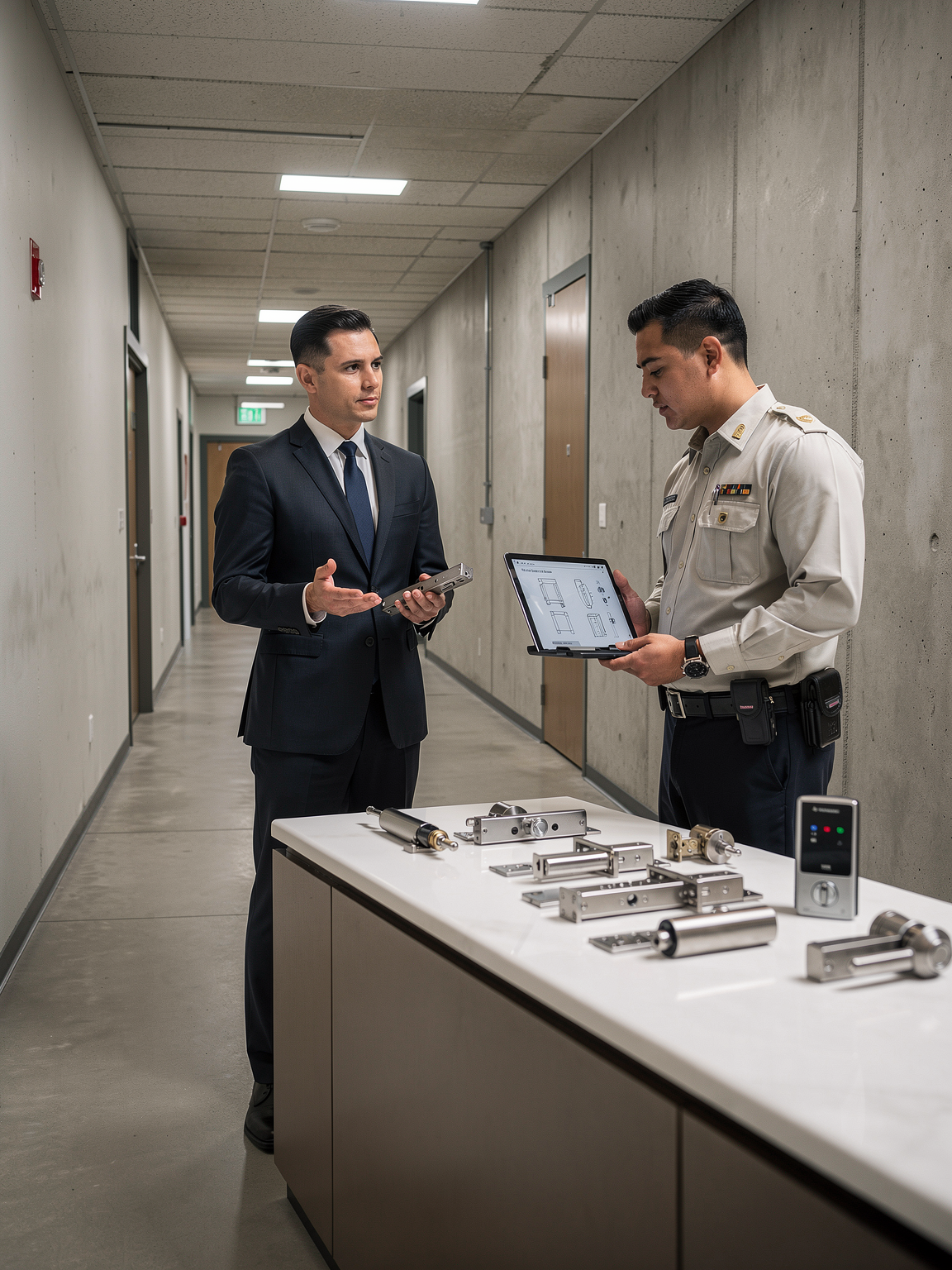
Security professionals help you match hardware to actual needs. They assess your doors, understand your security requirements, and recommend components that balance quality with cost-effectiveness.
This consultative approach prevents two common mistakes:
Over-speccing low-use doors. You don't need thousand-dollar locks on storage rooms used eight times a year. Save that investment for critical access points.
Under-speccing high-traffic areas. Residential-grade hardware fails fast in commercial applications. The upfront savings disappear when you're replacing components every few years.
Professional assessment ensures you're investing in the right hardware for each specific application. This targeted approach maximizes your budget while maintaining appropriate security and durability standards.
Maintenance Extends Hardware Life
Quality hardware still needs regular maintenance. Even the best components fail prematurely without proper care.
Your maintenance routine should include:
Lubrication: Apply appropriate lubricant to hinges, closers, and lock mechanisms during each inspection cycle.
Adjustment: Door closers need periodic adjustment to maintain proper closing speed and latching force.
Tightening: Check and tighten all mounting hardware. Loose screws accelerate wear on every component.
Cleaning: Remove debris from tracks, thresholds, and lock mechanisms. Dirt and grime accelerate wear.
Weather seal replacement: Replace worn weather stripping before it fails completely. This prevents energy loss and protects interior hardware from weather exposure.
You can handle these tasks in-house if you train your maintenance staff on proper procedures. Or you can contract with security professionals for semi-annual or annual service visits.
Professional maintenance ensures nothing gets missed. Trained technicians spot early warning signs and address small issues before they become expensive failures.
Measure Your Results
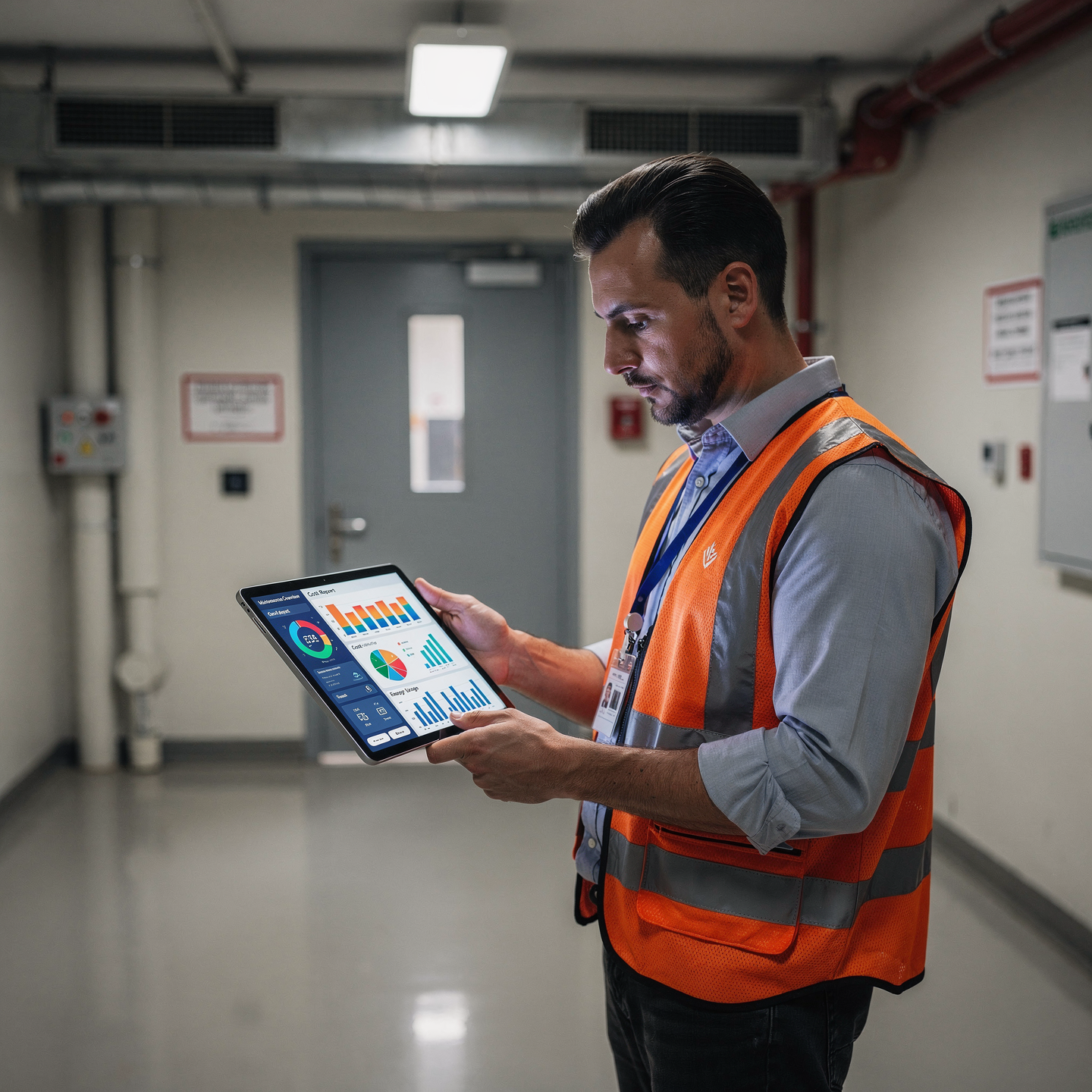
Track your hardware investments and maintenance costs. You need data to justify continued investment in quality components.
Monitor these metrics:
- Replacement frequency by door location and hardware type
- Emergency repair calls versus scheduled maintenance visits
- Average hardware lifespan by component grade
- Total cost of ownership per door over 5-year and 10-year periods
This data shows you exactly where quality hardware pays off and where you might be over-investing. Use it to refine your retrofit priorities and maintenance schedules.
Start With What Matters Most
You can't upgrade everything at once. Focus on doors where failure creates the biggest problems: main entrances, high-traffic corridors, and security-critical access points.
Implement your semi-annual inspection schedule. Catch problems early. Work with security professionals to match hardware to actual needs.
Quality hardware isn't an expense. It's an investment that pays back through extended door life, reduced maintenance costs, and fewer security incidents.
The doors you install cheap hardware on today will cost you far more tomorrow. Make the right choice now, or pay for it repeatedly over the next decade.
Not sure if your door hardware is built to last?
Schedule a commercial door hardware assessment with 310 Lock and identify weak components before they turn into costly failures.