
Posted by Lee Alderman on 22nd Dec 2025
How Preventive Maintenance Saves Thousands in Door Hardware Costs
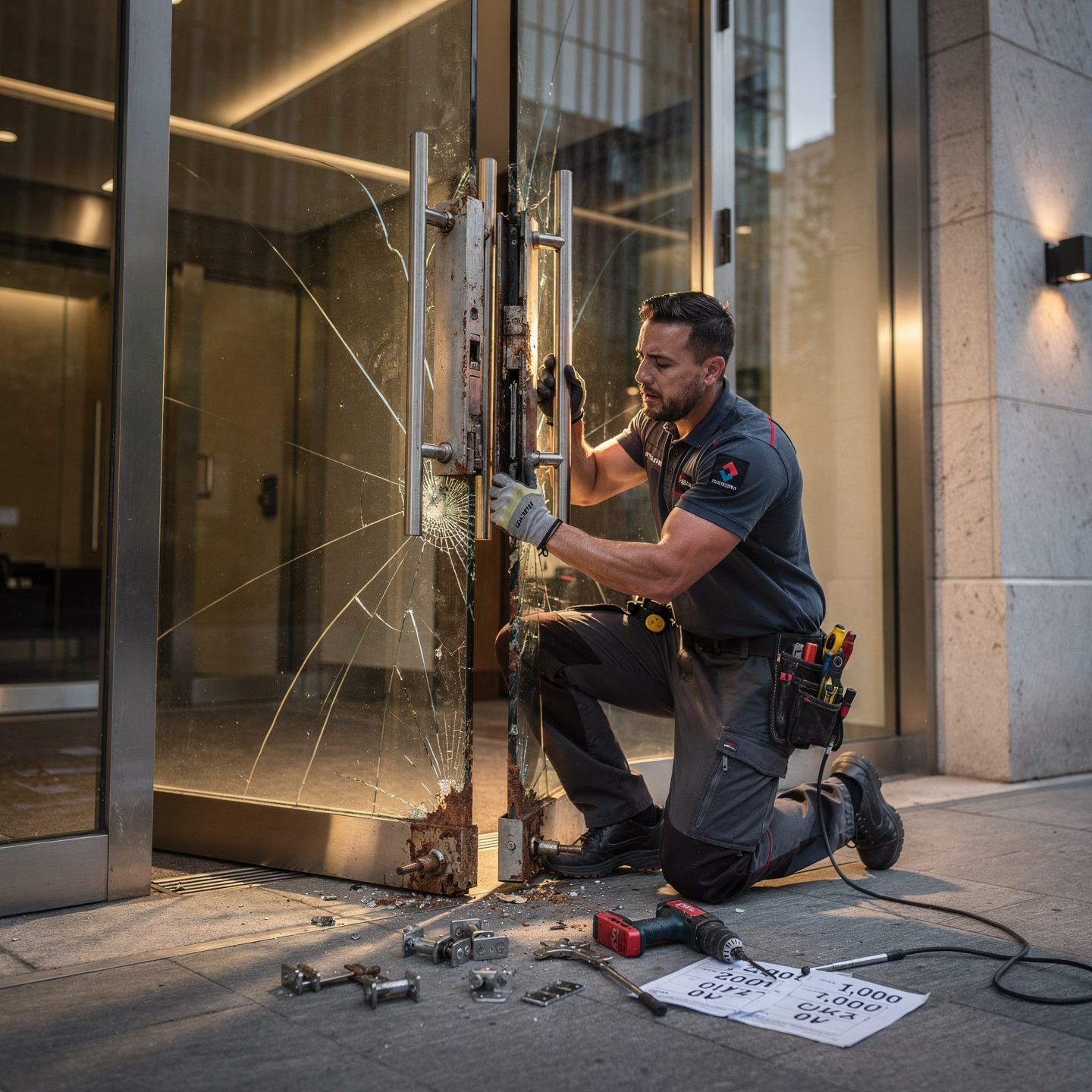
I've watched businesses pay $1,000 for emergency door repairs when a $20 preventive check would have caught the problem.
The math is simple.
The execution is even simpler.
But most businesses don't think about door hardware until something breaks. By then, you're not just paying for the repair—you’re paying for the lockout, the delayed opening, the inaccessible stockroom, and the overtime technician.
The Real Cost of Waiting
Emergency repairs cost three to five times more than planned maintenance.
That's not an estimate—it's the industry standard.
Here’s what happens when a lock loosens over time:
- Stress on the mechanism increases
- Internal components wear faster
- Eventually, the system fails
For a standard hollow metal steel door, you're looking at $500 to $1,000 in emergency repairs.
That same door? A professional could have adjusted and lubricated it for a fraction of that cost.
The hidden costs stack up quickly:
- Employees locked out during peak hours
- Delayed store openings that cost revenue
- Security vulnerabilities from malfunctioning locks
- After-hours service rates that double or triple
Industry data shows preventive maintenance can:
- Reduce costs by 12–18%
- Generate a 400% ROI
Every dollar you invest saves up to five dollars in unforeseen expenses.
What Actually Needs Maintenance
Door hardware maintenance isn’t complicated.
You need inspections, lubrication, and alignment checks.
The essentials:
- Inspect locks for loose screws and proper function
- Lubricate with silicone-based products (never grease)
- Check alignment and weather stripping
- Test operators and closers
- Verify latch mechanisms
The most commonly overlooked issue?
Locks loosening over time — this stresses the entire mechanism and speeds up wear.
High-traffic areas take the most punishment:
- Employee entrances
- Stockrooms
- Any door used repeatedly throughout the day
Weather stripping also deserves attention.
Damaged seals force your HVAC to work harder—raising energy costs daily.
Building a Maintenance Schedule That Works
Annual inspections cover all four seasons.
You catch expansion and contraction issues from temperature changes.
For 10–20 doors:
Use a simple Excel log:
- Door number
- Component columns
- Maintenance dates
- Condition notes
- Technician names
For larger facilities:
Use maintenance management software for automated reminders.
Documentation transforms reactive guesswork into predictive planning.
Patterns emerge:
Certain door types wear faster. Specific locations need more frequent attention.
Pro tip:
Spread maintenance across all doors during a single visit.
A $20-per-door inspection beats paying premium emergency rates one failure at a time.

Warning Signs You Can’t Ignore
The biggest red flag?
Doors that don’t latch properly.
This signals:
- Poor operator function
- Hardware malfunction
- Alignment issues
Employees saying “I walked right through a door that should have been locked” is a major warning.
Other signs:
- Doors not closing fully
- Visible hinge/strike wear
- Difficulty turning keys
- Unusual sounds
- Gaps between door and frame
These aren’t inconveniences.
They’re operational risks.
The Professional vs. In-House Decision
A hybrid model works best:
- Your team handles routine checks and lubrication
- Professionals perform annual inspections and advanced adjustments
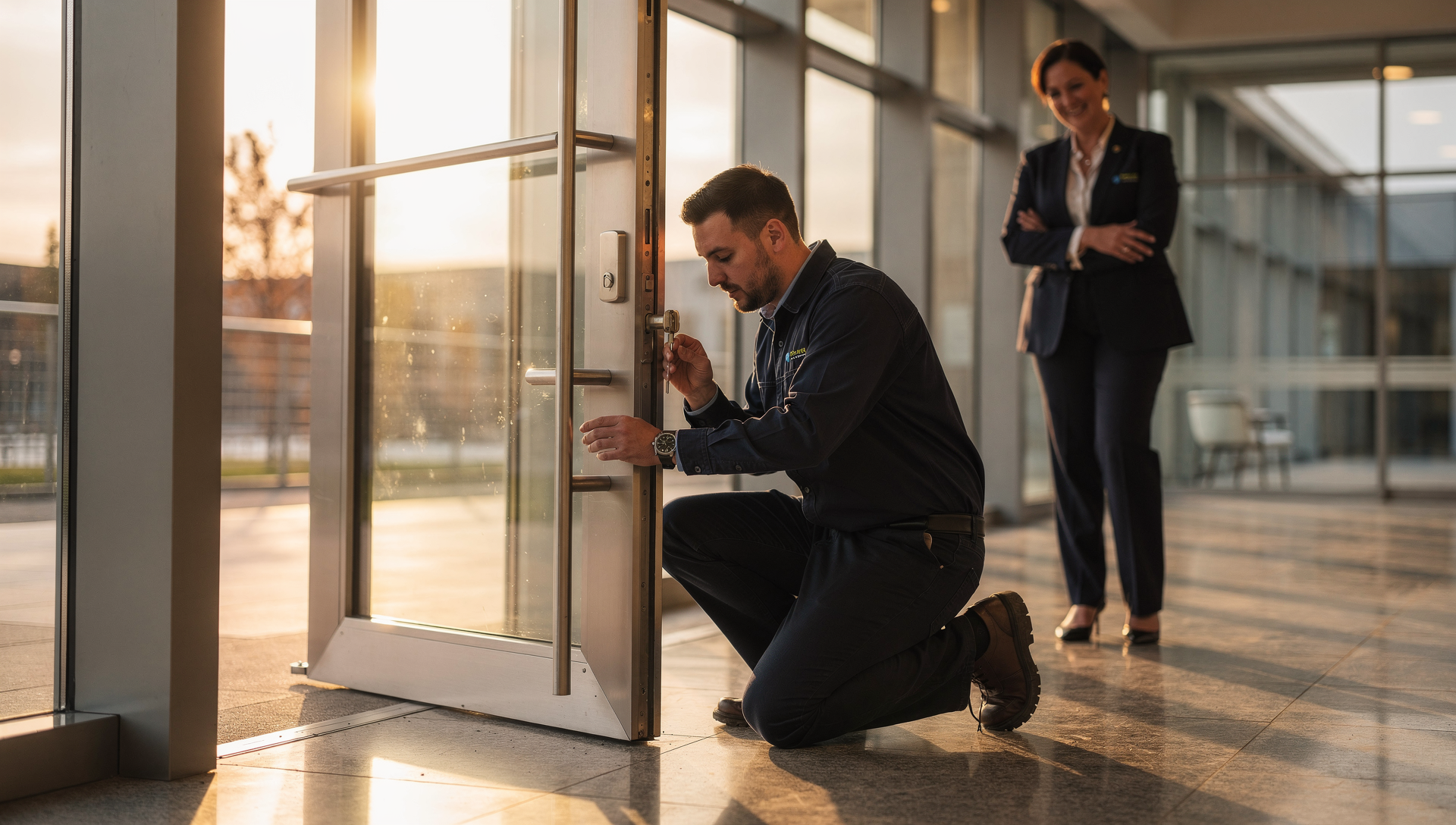
A trained locksmith sees issues untrained staff miss.
Annual professional inspections help catch problems early and avoid emergencies.

Cost Analysis: Preventive vs. Emergency
Emergency repair (steel door, hinge or pivot failure):
$500–$1,000
Preventive maintenance:
$20–$50 per door
(less when spread across 20+ doors)
Bulk maintenance reduces per-door cost significantly and eliminates repeat emergency calls.
Business interruption costs aren’t listed on the invoice—but they’re real:
- Lost sales
- Lost productivity
- Customer frustration
- Reputational damage
When you calculate downtime, the $20 inspection becomes a no-brainer.
The Bottom Line
An ounce of preventive maintenance saves thousands down the road.
Over a typical 20-year service life, maintenance costs exceed installation costs by 10x.
That makes your maintenance strategy one of your most important financial decisions.
The choice is simple:
Pay a little now or pay a lot later.
Start with high-traffic doors.
Schedule annual inspections.
Track what you find.
Adjust based on real wear patterns.
Your door hardware doesn't need to be perfect.
It just needs to be maintained.
Frequently Asked Questions
How often should door hardware be inspected?
Annually at minimum; semi-annually for high-traffic doors.
What lubricant works best?
Silicone-based. Never grease.
Should maintenance be in-house or professional?
Use a hybrid model.
Warning signs of imminent failure?
Doors that don't latch, difficulty turning keys, unusual sounds, visible wear.
Which doors need priority?
High-traffic employee entrances and stockrooms.

Need professional door hardware maintenance in Calgary?
Call 310-LOCK (310-5625) for preventive maintenance, inspections, and emergency repair.
Our experienced locksmiths catch problems before they become costly failures.
Protect your business from expensive downtime. Schedule your inspection today.